
AEO VS SEO: Understanding the Key Differences in Modern Search

In today’s digital world, businesses want their websites to appear at the top of search results. Two important strategies that help achieve this are Search Engine Optimization (SEO) and Answer Engine Optimization (AEO). While both aim to improve online visibility, they work in different ways. Understanding the difference between AEO and SEO can help businesses create better digital marketing strategies.
What is SEO?

Search Engine Optimization (SEO) is the process of improving a website so that it ranks higher on search engines like Google Search and Bing. SEO focuses on optimizing website content, keywords, backlinks, and technical performance to increase organic traffic.
SEO focuses on optimizing different elements of a website to make it more useful, relevant, and trustworthy for both search engines and users. Search engines use complex algorithms to analyze millions of web pages and decide which pages should appear first in the results. Websites that follow good SEO practices have a better chance of ranking higher, which leads to increased organic traffic and better online visibility.
Another important aspect of SEO is high-quality content creation. Search engines prefer websites that provide valuable, informative, and engaging content for users. Blog posts, articles, guides, and website pages that answer user questions clearly can improve a website’s ranking. Regularly updating content also signals to search engines that the website is active and relevant.
Technical SEO is another important component of SEO. It involves optimizing the technical aspects of a website to help search engines crawl and index the site effectively. This includes improving website speed, ensuring mobile-friendliness, fixing broken links, creating a clear site structure, and using secure connections (HTTPS). Technical SEO ensures that search engines can easily access and understand the website.
SEO is also closely connected to user experience. A website that loads quickly, is easy to navigate, and provides helpful information will keep visitors engaged for longer. Search engines consider user behavior, such as time spent on a page and bounce rate, when determining rankings. A positive user experience can therefore contribute to better SEO performance.
The main goal of SEO is to drive organic traffic, which means visitors who find a website through unpaid search results rather than paid advertisements. Organic traffic is valuable because it often comes from users who are actively searching for information or solutions, making them more likely to engage with the website or become customers.
The main goal of SEO is to make websites more visible when users search for specific keywords. For example, if someone searches for digital marketer in Kerala, SEO helps a relevant website appear higher in the results. SEO strategies include keyword research, quality content creation, on-page optimization, link building, and improving website speed and user experience.AEO vs SEO
What is AEO?

Answer Engine Optimization (AEO) focuses on providing direct answers to user questions, especially through voice search and AI-powered platforms. Instead of only ranking websites, AEO aims to make content appear as a direct answer in search results.
Today, many users ask questions directly on search engines or voice assistants such as Google Assistant, Amazon Alexa, and Apple Siri. These platforms try to give users immediate answers without requiring them to open multiple websites. AEO helps businesses structure their content so these systems can easily understand and display the information.
AEO also supports the growing use of voice search. More people are using smartphones and smart speakers to search for information by speaking instead of typing. Voice search queries are usually longer and more conversational, so AEO focuses on natural language and simple explanations that match how people speak.
Another key element of AEO is providing concise and accurate information. Answer engines prefer content that quickly delivers the most relevant answer to a question. This means the content should be clear, well-organized, and easy for both users and search engines to understand
The main goal of AEO is to improve visibility in answer-based search results. Instead of only appearing as a link, optimized content may appear as a featured snippet, knowledge panel, or voice response. This can increase brand visibility, build authority, and help businesses reach their audience faster.
AEO is commonly used by voice assistants and AI tools such as Google Assistant, Amazon Alexa, and Apple Siri. When users ask questions like ‘What is digital marketing?” or “Who is the best digital marketer, answer engines try to provide a quick and clear response.
AEO uses structured data, FAQs, clear headings, and concise answers so search engines can easily understand and display the information.
Key Differences Between AEO and SEO
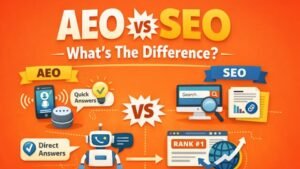
| Feature | SEO | AEO |
| Main Goal | Improve website ranking in search engines | Provide direct answers to user queries |
| Focus | Keywords, backlinks, and website optimization | Question-based content and structured data |
| Search Type | Traditional text-based search | Voice search and AI-based answers |
| Result Format | Website links in search results | Featured snippets or voice answers |
| User Experience | Users click and explore websites | Users receive instant answers |
Why Businesses Should Use Both AEO and SEO
Using both AEO vs SEO together creates a stronger digital marketing strategy. SEO helps drive traffic to websites through search rankings, while AEO helps businesses appear in voice search results and quick answers.
SEO helps businesses drive organic traffic to their websites by optimizing content, keywords, backlinks, and technical structure. When a website ranks higher in search results, it becomes easier for potential customers to discover the business and learn about its products or services. This long-term strategy helps build brand credibility and consistent online visibility.
When businesses combine SEO and AEO, they can reach users across multiple search platforms and technologies. SEO brings visitors to the website through traditional search results, while AEO ensures that the business appears in voice searches, AI responses, and featured snippets. This combination improves visibility, enhances user experience, and increases the chances of attracting potential customers.
On the other hand, AEO focuses on delivering clear and direct answers to users’ questions. With the rise of voice search tools such as Google Assistant, Amazon Alexa, and Apple Siri, users often expect quick answers rather than browsing multiple websites. AEO helps businesses structure their content in a way that search engines and AI systems can easily understand and display as featured snippets or voice search results.
Adapting to Changing Search Behavior

The way people search for information online is constantly changing. In the past, users typically typed short keywords into search engines. Today, many users ask full questions or use voice search through digital assistants like Google Assistant, Amazon Alexa, and Apple Siri. These technologies rely heavily on answer-based content.
SEO helps businesses target traditional search queries, while AEO helps them respond to conversational questions and voice searches. By combining both strategies, businesses can effectively reach users regardless of how they search for information.
Understanding AEO vs SEO is becoming increasingly important in this shift, as AEO vs SEO highlights how both approaches work together to improve visibility. Businesses that apply AEO vs SEO strategies can better adapt to changing user behavior and strengthen their presence across both search engines and AI-driven platforms.
Modern digital marketing now depends on AEO vs SEO to balance traditional rankings with AI-driven answers. The rise of voice search has made AEO vs SEO a key strategy for online visibility. Companies using AEO vs SEO effectively can reach users across multiple search formats. At the same time, AEO vs SEO helps improve engagement by providing both detailed content and quick answers. Marketers who understand AEO vs SEO can create more flexible content strategies. Overall, AEO vs SEO plays a crucial role in building long-term digital success.
Building Trust and Authority

AEO vs SEO Another important reason businesses should use both AEO vs SEO is to build trust and authority online. High-ranking websites often gain credibility in the eyes of users because people tend to trust the top results shown by search engines. SEO helps achieve this by improving website structure, optimizing keywords, creating valuable content, and earning quality backlinks.
AEO further strengthens authority by positioning a business as a reliable source of information. When a search engine selects a piece of content as a featured answer or voice search result, it signals that the information is trustworthy and relevant. This helps build stronger brand recognition and credibility over time.
SEO drives organic traffic directly to websites through search engine rankings, while AEO increases exposure across AI-driven platforms and voice search systems. Together, these strategies create multiple opportunities for users to discover and interact with a business.
Staying Competitive in the Digital Market

Competition in the online marketplace continues to grow as more businesses invest in digital marketing. Companies that rely only on traditional SEO may miss opportunities to reach users through voice search and AI-driven search experiences. Similarly, focusing only on AEO without strong SEO foundations can limit website visibility in traditional search results.
By using both AEO vs SEO businesses can create a balanced digital strategy that adapts to current trends and future technological developments. This approach helps them stay ahead of competitors and maintain a strong online presence.
Increasing Website Traffic and Engagement

Although AEO sometimes provides direct answers without requiring a website visit, it still plays an important role in increasing brand awareness and engagement.
SEO drives organic traffic directly to websites through search engine rankings, while AEO vs SEO explains the difference between traditional search and AI-driven answer platforms. Together, these strategies create more opportunities for users to discover and interact with a business.
As technology evolves, businesses using both AEO vs SEO strategies can improve visibility, reach their target audience, and increase online engagement. Understanding AEO vs SEO helps brands stay competitive in both traditional and AI-powered search results.
Conclusion